


Hey friends 👋
A few weeks ago we wrapped up the Finetuning Series, and honestly … what a ride!
The response from you all was way beyond what I expected, and a lot of the conversations that came out of it (in the comments, in my inbox, in DMs) shaped what I want to do next.
So here we are. Time to take the next steps.
I've been working quietly on two things over the past few months, and today I want to share both of them with you. Together, they're the direction The Neural Maze is heading for the rest of the year.
Let's get into it 😎
Agents in Production (with Luis Serrano)
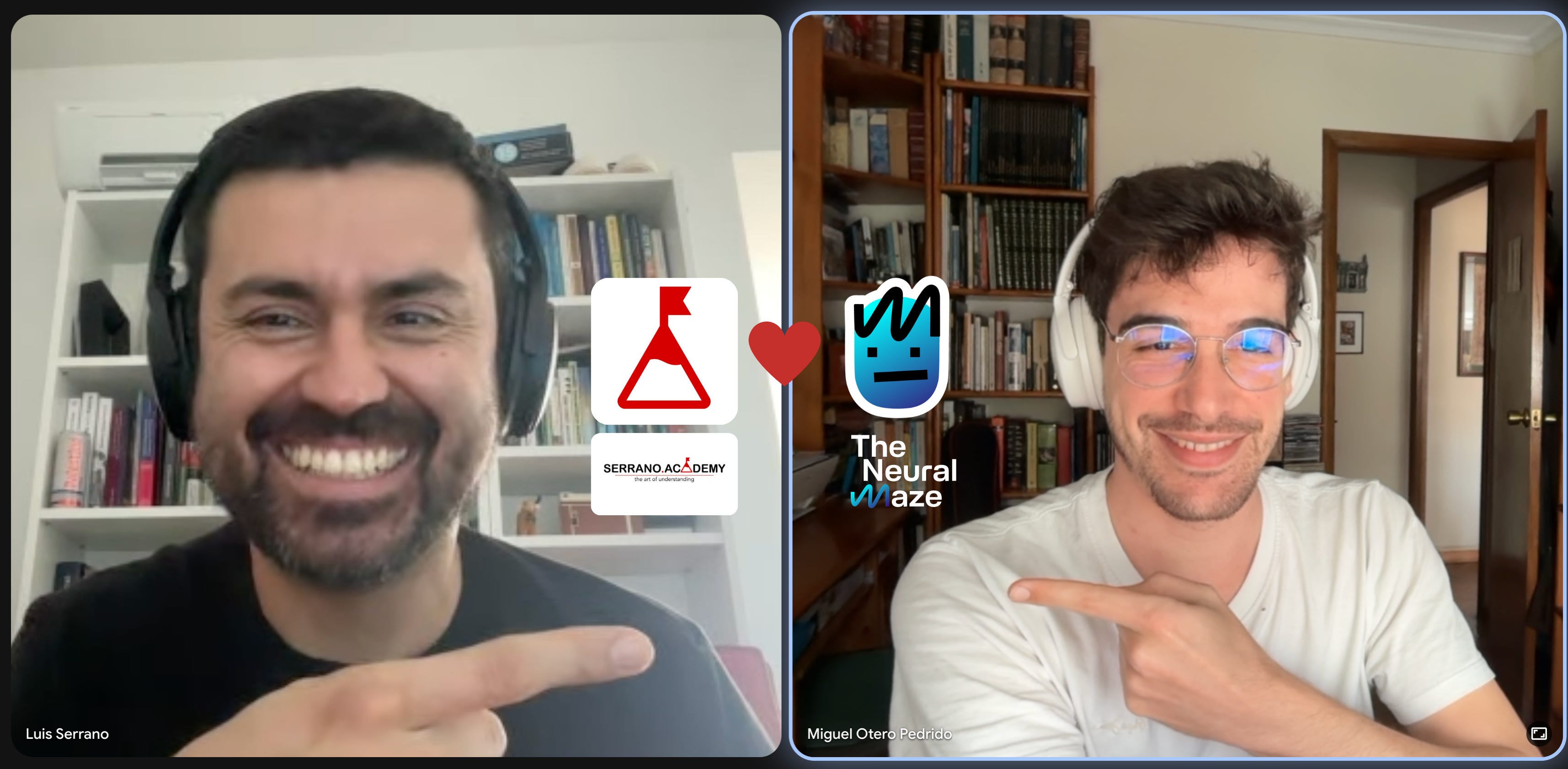
Earlier this year I was at the DataHack Summit in India, and that's where I met the one and only Luis Serrano.
Luis is THE GOAT at teaching the intuition behind AI. The math, the algorithms, the "why does this actually work" — he has this rare gift of taking something that looks terrifying on a whiteboard and making it feel obvious.
You watch one of his explanations and you come out the other side thinking "wait, that's it? Why didn't anyone ever explain it like that before?" Thousands of students have gone through his Serrano Academy for exactly this reason.
And here at The Neural Maze, you already know what I care about: taking these systems and actually shipping them to production. Not notebooks. Not demos. Real systems, on real infrastructure, with real users.
So at some point during that summit we looked at each other and asked the obvious question:
What if we merged both worlds?

Not a collaboration where one person does a guest lecture and disappears. An actual fusion (sorry for the Dragon Ball reference). Luis's intuition + The Neural Maze engineering. Theory and production, taught side by side, week by week.
Because here's the thing — and I think you've probably felt this too:
Some courses teach you the engineering, but you end up copy-pasting code you don't really understand. The intuition is missing.
Other courses teach you the intuition beautifully, but you finish with a notebook that never leaves your laptop. The production piece is missing.
This course is the missing piece.
The structure: 6 weeks, one real system
We've designed the course around a single idea: you don't really learn agents until you've built one, broken it, evaluated it, and deployed it. So that's what you'll do — incrementally, one layer at a time, over 6 weeks.
Every week has the same rhythm:
Theory session with Luis — the intuition, the "why," the mental models
Hands-on lab with me — translating Luis theory into actual implementation
Deployment session with me — shipping it to the cloud
Live office hours — weekly Q&A
Content is delivered week by week, so the whole cohort moves through the material together. Everyone is wrestling with the same ideas in the same week — which means office hours, comments, and community conversations are actually alive, not scattered across six different points in time.
Across the course, we'll go deep on the topics that actually matter when you're building production agents:
RAG, done properly. What it really is, why naive pipelines break, and how to fix the parts that silently ruin your results.
The ReAct pattern. From static chains to systems that think — Thought → Action → Observation, tool use, and your first real agent.
Multi-agent architectures. Why one agent isn't enough. Supervisor, hierarchical, swarm, and collaborative patterns.
MCP and A2A. The two emerging standards that are quietly becoming the backbone of the agent ecosystem.
Evaluation (and this is where we go hardest)
Deployment as real services. Containerization, cloud infrastructure, service-to-service communication, CI/CD, monitoring, cost.
By the end of the course, you won't have "a notebook." You'll have a real production system:
A multi-agent, multimodal system on Google Cloud, using real agent protocols (MCP + A2A), deployed as services running on Cloud Run, capable of analyzing any kind of PDF you throw at it — research papers, legal contracts, financial reports, technical documentation.
Launch plan
We're launching at the end of May. The landing page is coming very soon, and that's where you'll be able to join the waiting list.
A note for premium subscribers: we're planning big discounts on the course price for you! Consider this your heads-up — waiting list spots for premium subs will be prioritized too.
The AI Systems Engineering Journey
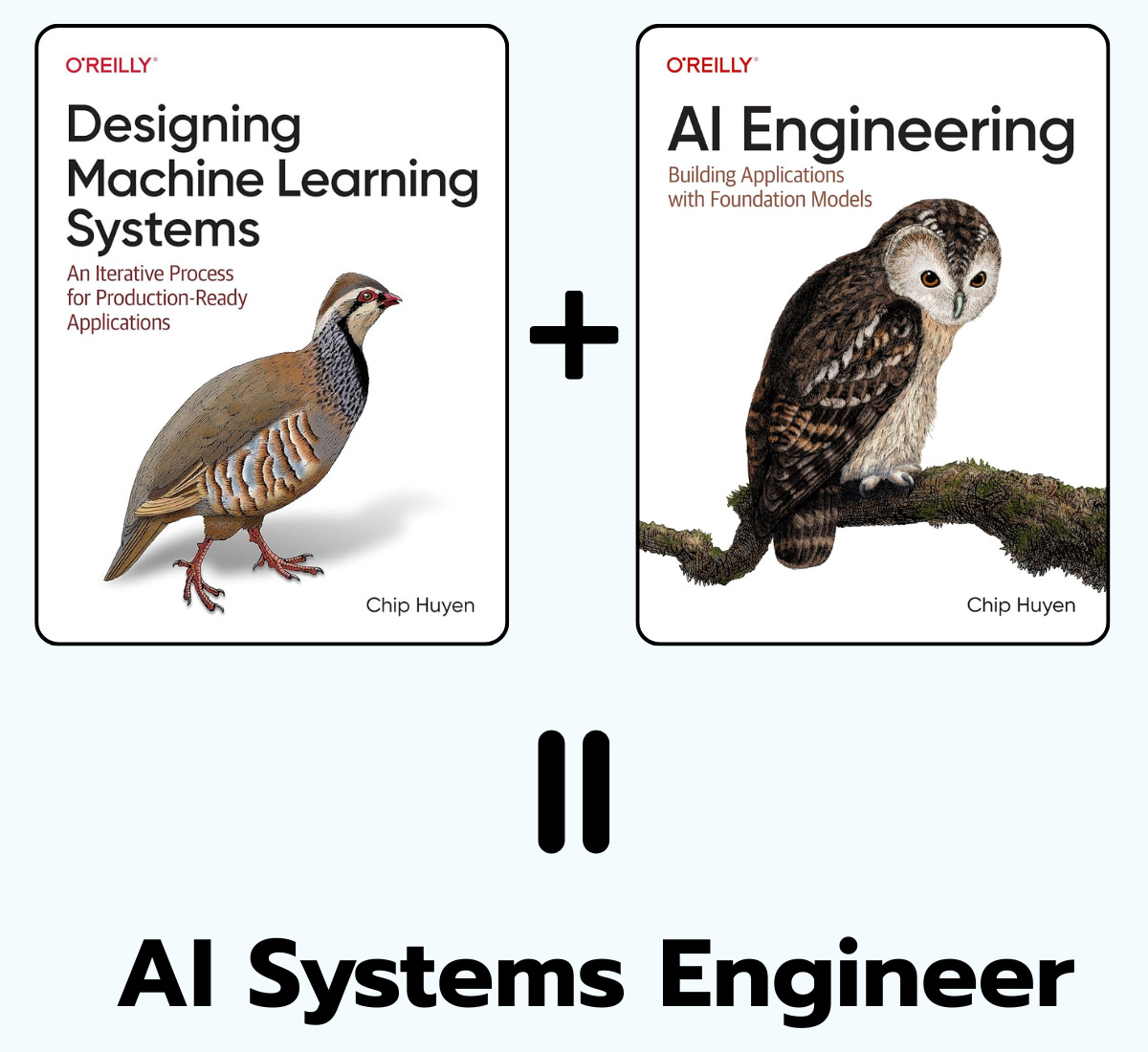
The course is the big swing. But the newsletter keeps going, and I want to use the next stretch of issues for something I've been circling for a while.
I'm calling it The AI Systems Engineer Journey.
Yes, I probably just invented a new job title: AI Systems Engineer. But in practice, the line between ML Engineer and AI Engineer is already blurry. My title says Senior ML Engineer, yet I also work with LLMs, agents, and foundation models — and at the end of the day, the job is simple:
Building AI systems that solve real problems.
That's exactly what The AI Systems Engineer Journey is about. A series of weekly sessions and articles designed to give you the background and context you need to fully understand — and actually benefit from — the projects and cohorts we build here at The Neural Maze.
What this isn't
This isn't a "6-week cohort that turns you into an AI engineer." That promise isn't realistic, and you know it.
What this is
A long-term journey. Week by week, we'll cover the foundations required to build real systems.
But … I want your input before I start writing.
Before I publish issue #1, I want to know what you actually want to see first.
What being a premium subscriber gets you
🎟️ Discount on Agents in Production
📬 Priority on the waiting list
📚 Full access to The AI Systems Engineer Journey — every article, video, and office hour in the series
If you’re serious about building AI systems, premium pays for itself the moment the course opens!
Next Steps
I want to talk through all of this with you properly — so I'm hosting a short live session tomorrow to walk through both announcements, answer your questions, and give you a behind-the-scenes look at what Luis and I have been building.
Details will land in your inbox shortly, so bring your questions!
After that, here's what's coming:
📄 The landing page for Agents in Production — dropping very soon, with the waiting list open
📬 An email from me once you're on the list, with pricing, enrollment window, and everything you need to know
✍️ The first issue of The AI Systems Engineer Journey — being outlined right now, shaped by your poll answers
If you've got specific topics, questions, or pet peeves you want us to hit — for the course or the series — hit reply. I read everything.
See you tomorrow!
The evaluation + deployment axis is what most agent courses skip, so it's great you're putting it at the center. In my own research the part that keeps biting production teams isn't task success rate; it's trajectory-level evaluation, specifically whether each tool call was the right choice given the state the agent was in, not just whether the final answer was correct. Decomposing runs into atomic claims at the step level is how I ended up making these failures visible. One request: when you get to the evaluation week, consider framing MCP and A2A from the eval angle too, since the interfaces between services are where silent drift tends to live. Really looking forward to this.
I currently work as a data scientist at a Colombian startup (with over a year of experience), but I want to take the next step and get a remote job in the United States or another country with better career opportunities.
My bachelor degree wasn't in engineering but in business, so despite being a data scientist in title I'm constantly looking for ways to bridge that gap by acquiring the most relevant skills in the market. I have some knowledge of AI since my company uses it for classification, sentiment analysis, and so on.
My expectations for this training are to have projects I can showcase in my portfolio, as well as acquire the skills that will bring me closer to my goal of working abroad (a former colleague achieved this, so why can't I?). Do you think my expectations are realistic?