



Before 2025 comes to an end and we fully step into 2026, I want to share a quick update on how I’ve spent the Christmas holidays.
I used this break to step back and focus on direction.
On deciding what’s actually worth building next, what deserves long-term attention, and what will deliver the most value to you in 2026.
I now have a clear set of ideas for the year ahead. The only real question left is simple:
What should we build first?
And that’s where YOU come in 🫵
Further down, you’ll find a few polls reserved for the community. I’d really appreciate it if you could answer all of them. This isn’t just feedback, your choices will directly set the priorities, order, and focus of what gets built next.
So, ready to shape what’s coming in 2026?
Let’s get started! 👇
The Chef’s Menu for 2026
These are the dishes ready to be cooked. You’ll decide what we serve first!
Finetuning Sessions
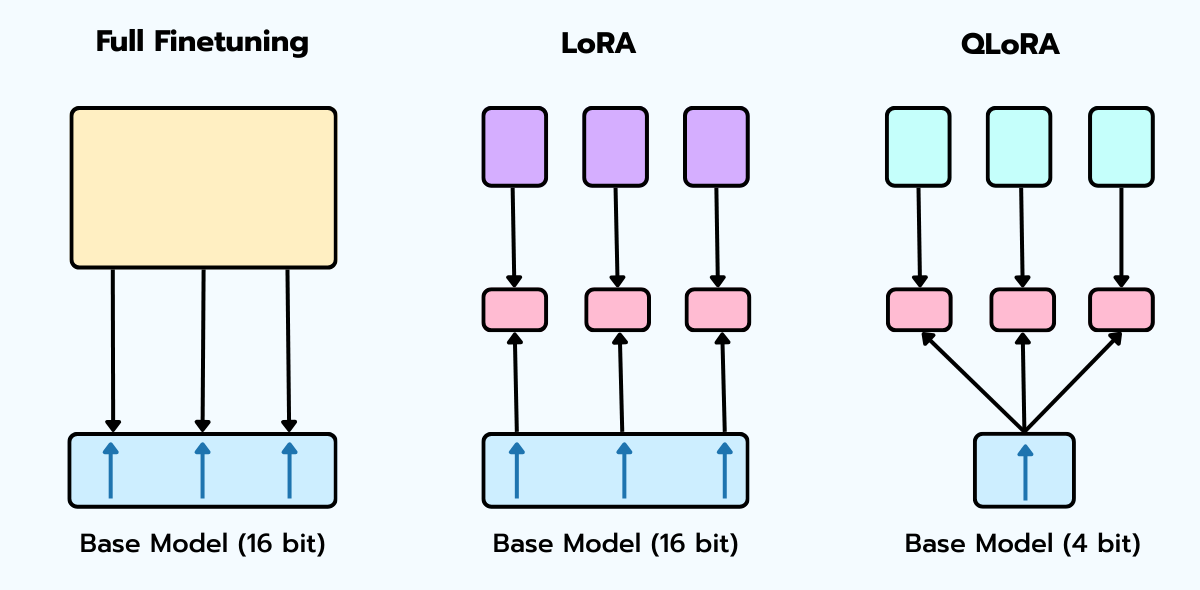
Format: Weekly Sessions 🧑🏫
The sessions will run weekly and follow a simple structure:
One written article per session covering the core concepts
Available to everyone
One video session with step-by-step walkthroughs and code
Available to Premium Subscribers
This course would cover everything you need to know about fine-tuning, from theory to real-world practice.
We’ll cover fine-tuning across different model types, not just LLMs, with a strong emphasis on real-world decision-making and implementation.
With smaller, more efficient models becoming more common, fine-tuning is quickly turning into a core skill for AI engineers.
Topics will include:
What finetuning actually is (and when it’s the wrong tool)
Parameter-efficient approaches like LoRA and QLoRA
Applying reinforcement learning to improve model behavior
Fine-tuning vision models for practical use cases
Real-world trade-offs and implementation details
And much more!
Traditional ML Systems
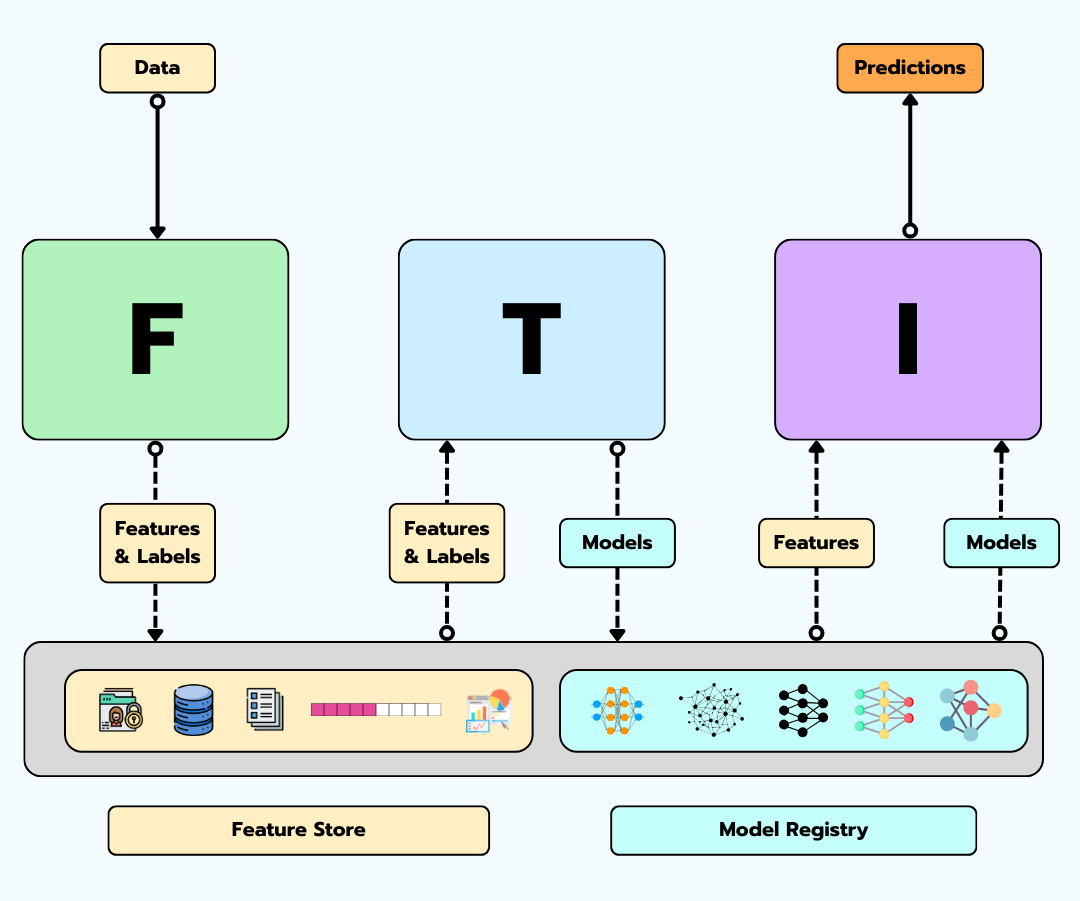
Format: To be defined …
This section focuses on real-world ML systems we could build in 2026. If there’s enough interest, I’ll dive deeper into each idea so you can help decide what to build first. The final format—weekly sessions, cohorts, or deep dives—will depend on the project.
While most of the hype today is around LLMs and agents, The Neural Maze has always been about AI and ML Engineering. And in real jobs, that usually means building things like forecasting pipelines, churn models, or pricing systems—not agents.
That’s why, in 2026, we’ll go deep into “traditional” ML systems—practical, production-focused, and widely used.
Projects on the table:
Real-time fraud detection (batch + streaming)
Demand forecasting (time series)
Customer churn prediction system
Real-time pricing optimization
Across these projects, we’ll cover the core skills that matter in production: CI/CD, model registries, data validation, drift monitoring, IaC, cost control, and observability.
Less hype. More systems you’ll actually build at work!
The AI Systems Engineer Journey
Format: Weekly Sessions 🧑🏫
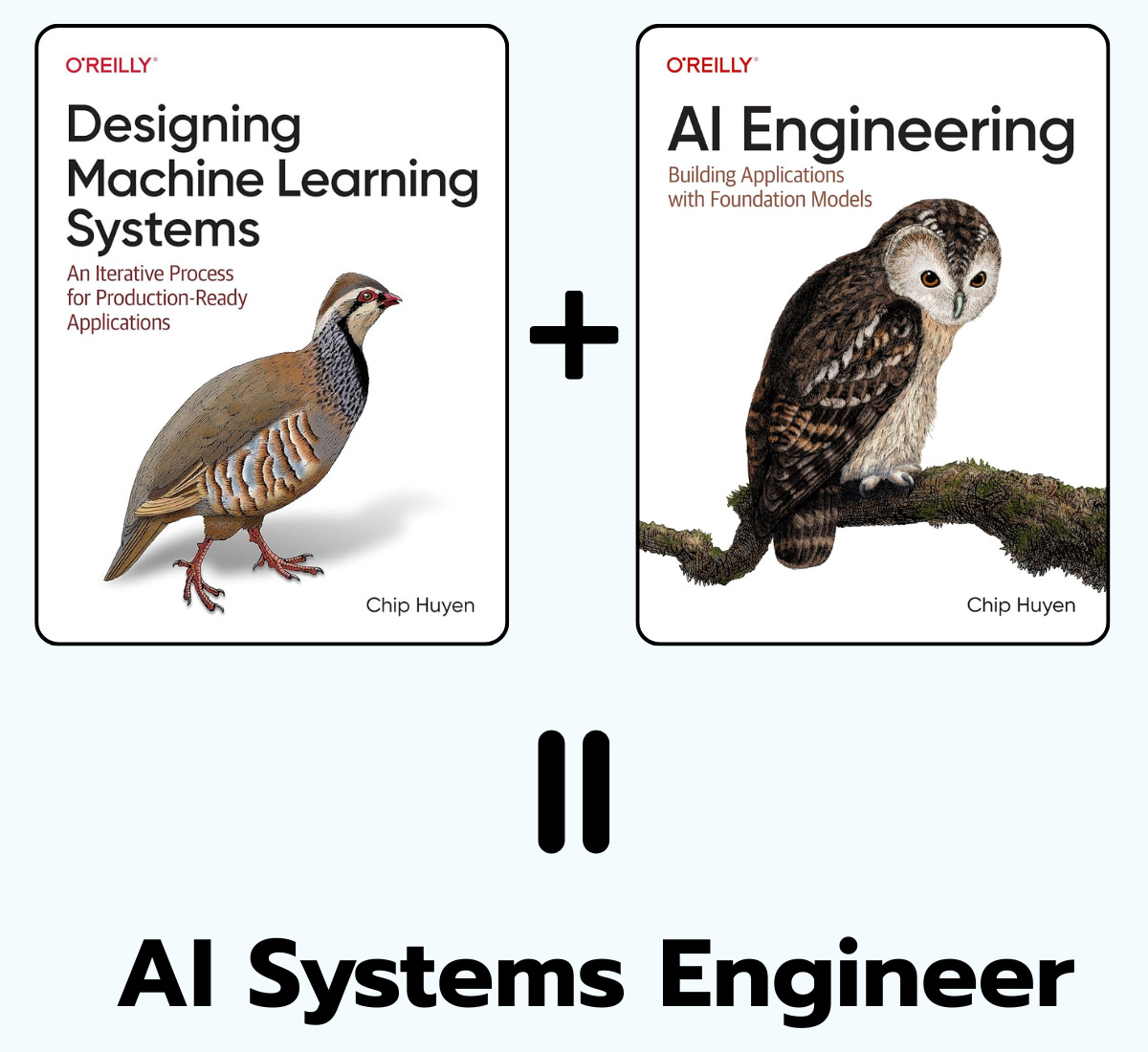
Yes, I probably just invented a new job title: AI Systems Engineer.
But in practice, the line between ML Engineer and AI Engineer is already blurry. My title says Senior ML Engineer, yet I also work with LLMs, agents, and foundation models—and at the end of the day, the job is simple:
Building AI systems that solve real problems.
That’s exactly what The AI Systems Engineer Journey is about. This series of weekly sessions and articles is designed to give you the background and context needed to fully understand—and actually benefit from—the projects and cohorts we build here.
This isn’t a “6-week cohort that turns you into an AI engineer.” That promise isn’t realistic.
Instead, this is a long-term journey. Week by week, we’ll cover the foundations required to build real systems:
Docker, FastAPI, feature stores, model registries, vector databases, inference, MLOps, LLMOps, RAG, and more.
Think of it as the bridge between theory and production—between reading about AI systems and actually building them in the real world.
Production-ready Recommender Systems
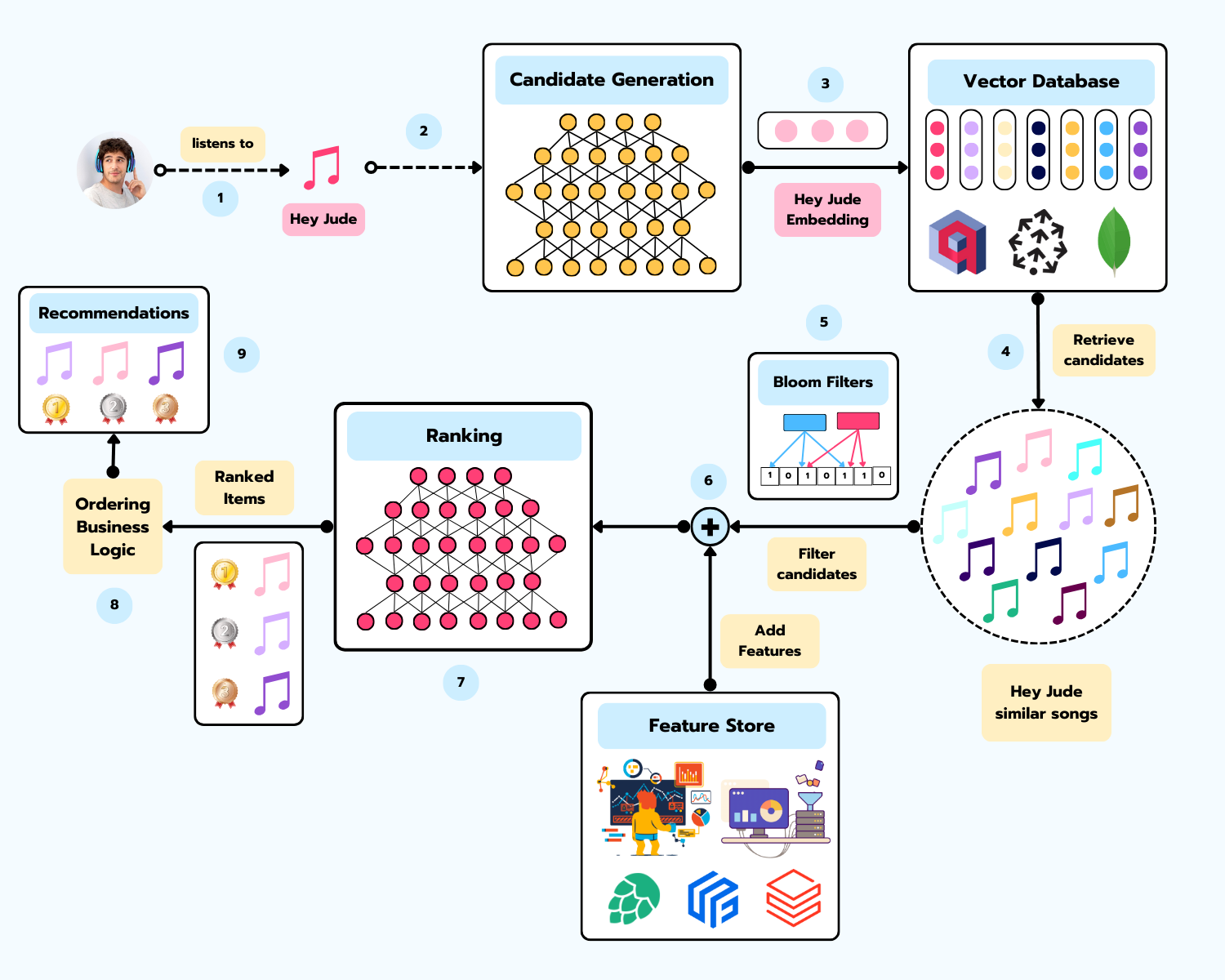
Format: Cohort 🎓
This will run as a cohort-based program. Recommender systems are broad, deep, and interconnected, and this format allows us to cover the full picture while building a complete system together.
Recommenders are my main area of expertise.
I’ve spent over five years designing and deploying them in production, including in the fashion and banking industries. All the implementation in this cohort is a synthesis of what I’ve learned building real systems—not textbook examples.
In this cohort, we’ll cover:
The core pillars of recommender systems
The most widely used modern setup: 4-stage recommender architectures
How to take a recommender system from design to production
The goal is straightforward: to understand—and build—the kind of recommender systems used by companies like Amazon, Spotify, or TikTok, with a strong focus on real-world constraints and engineering trade-offs.
Document Intelligence with VLMs & ColPali
Format: Cohort 🎓
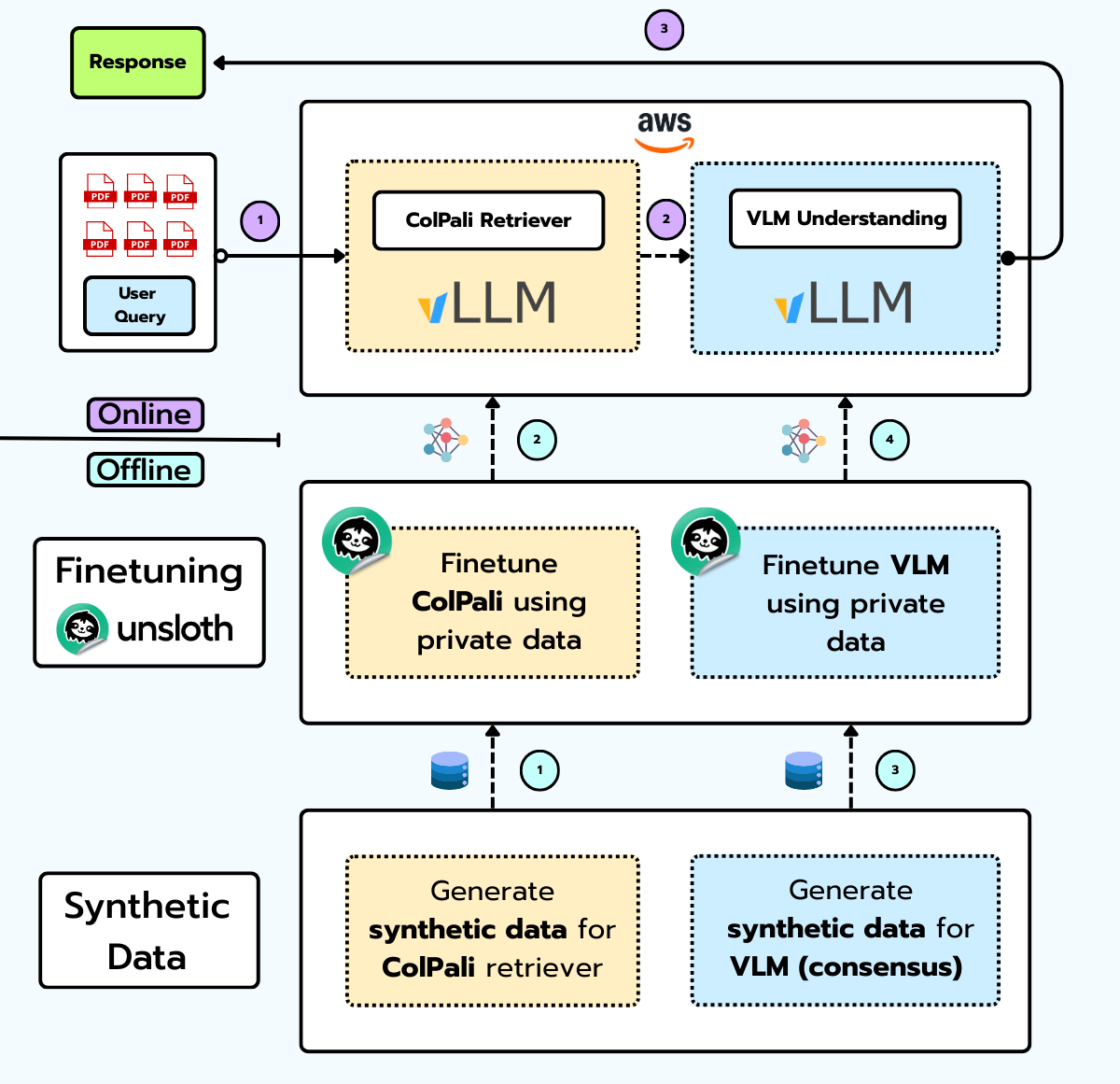
If you’ve ever wondered how tools like ChatGPT, Claude, or Gemini can ingest a PDF and return answers almost instantly, this cohort is about the systems behind that experience. Not demos. Not toy pipelines. The real thing.
We’ll dive into modern document architectures built around multimodal models, multi-vector retrieval, and ColPali-style approaches—powerful techniques that are widely used in production, yet rarely explained end to end.
Before going further, there’s something important to know:
👉 This exact work has been accepted as an IEEE-CAI 2026 tutorial, one of the most important AI-for-industry conferences in the world!
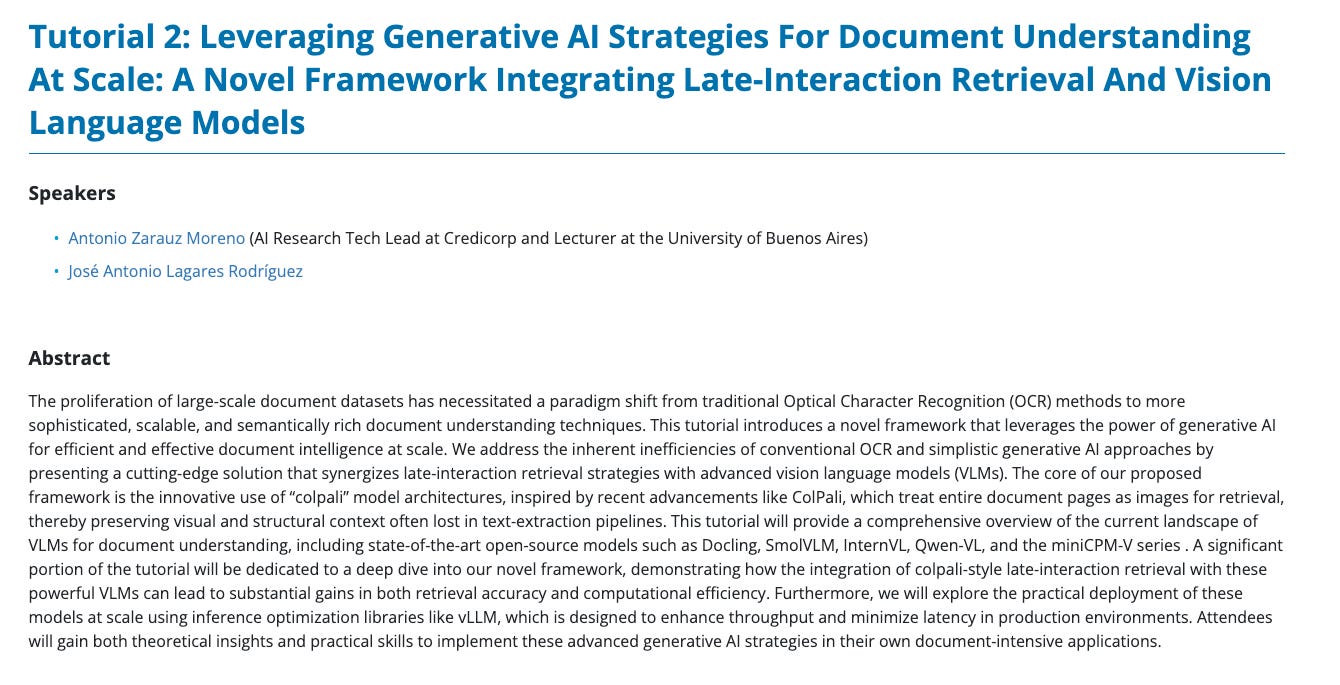
This isn’t speculative content or early experimentation, we are talking about industry-validated, production-level material.
In this cohort, you’ll learn how to:
Understand modern retrieval and vision-language models
Serve large models efficiently using state-of-the-art inference frameworks (vLLM)
Generate synthetic data from private data to finetune your models
Finetune ColPali retriever and VLM with Unsloth and transformers library, using your private data
Design structured, end-to-end document workflows (no black-box agent frameworks)
Deploy and scale these systems on cloud infrastructures
Optimize latency, cost, and quality through fine-tuning and system-level decisions
Learn from real production use cases where these techniques are already applied
By the end of this cohort, you won’t just understand how modern document systems are built. You’ll know how to engineer them at production level, with the same principles presented at IEEE-CAI.
What is a cohort?
If you’ve been paying attention to the different ideas so far, you’ve probably noticed that some are framed as weekly sessions, while others are presented as cohorts.
Before we move on to the polls, I want to take a moment to clarify what a cohort actually is, why it’s different from the content formats I’ve offered so far, and when it makes sense to use one over the other.
This will help you better understand what to expect, and make more informed choices when deciding what we should build next!
Up to this point, The Neural Maze has offered two main types of content:
📕 Articles — long-form, structured written content designed for deep, asynchronous learning.
🧑🏫 Office Hours — interactive tutorials where we explore a specific topic in depth, walk through implementations, and answer questions in real time (e.g. the Phone Calling Agents Course)
So, starting on 2026, I’ll introduce a new format:
🎓 Cohort Courses
Cohorts are designed for deep, structured learning, combining teaching, practice, and feedback. Compared to the previous weekly sessions (office hours), a typical cohort includes:
Multiple weekly live teaching sessions (~ 120 minutes each)
Structured sessions where we introduce concepts, walk through implementations, and progressively build a complete system.
Weekly assignments
Hands-on work to apply what you’ve learned, with time to experiment, test ideas, and run into real-world issues.
Office Hours (small groups)
Dedicated time for questions and feedback, run in small groups (≈5 people). These are not lectures, but focused sessions to unblock issues and review your work.
Final capstone week
A final project where everything comes together into an end-to-end system.
This structure is what makes cohorts different: continuity, practice, and personalized feedback, not just content delivery.
Your turn … let’s vote!
You’ve now seen the different directions, formats, and projects on the table for 2026. Before anything gets built, I want your input.
Below you’ll find a few quick polls. Please take a moment to answer all of them—your responses will directly shape the priorities, the order, and the focus of what we build next.
Let’s start with the first question. A few weeks ago, we completed our first live project with office hours, and I’d like to get your feedback on that format.
Now that you’ve seen the types of topics I’m considering for cohorts, and how the cohort format works (longer duration, structured progression, assignments, and office hours), I’d like to get your take on this approach.
So here’s the next question:
Before getting more specific about individual projects, I’d like to understand what generally excites you the most when it comes to content from The Neural Maze.
I’d also like to understand how you prefer to consume The Neural Maze content.
You’ve seen a range of topics and project ideas throughout this roadmap—from ML systems and recommender systems to document AI, fine-tuning, and AI systems engineering. So …
Over the past few months, I’ve received a few requests for 1:1 sessions—mostly around general guidance, career decisions, system design choices, or unblocking specific problems.
Before considering this as a format, I’d like to understand how valuable this would be for you.
Thanks a lot for taking the time to answer these questions, builder! ❤️
I’ll leave the polls open for about a week so everyone has time to weigh in. After that, we’ll get together in a live session where I’ll share the final plan for the 2026 roadmap and how all this feedback translates into concrete content.
Before I go, I just want to wish you a great end to 2025!
I’m really excited about what’s coming next, and even more excited to build 2026 together with you.
See you soon! 🥂
Looks good! Whatever topic you decide to go with, I think what matters is the production level quality. That, and systems level thinking.
These are all amazing projects, looking forward to learning from them!
Two open source tools I use in my MLOPs work day to day on a personal hobby basis are DVC and CML, check them out and see where you can incorporate them.
Check out my repo here where I used them in a Gitops workflow to finetune llama2 on a self hosted Github Actions runner with just 8GB of VRAM:
https://github.com/ShahNewazKhan/skynet
I think you can incorporate DVC and CML into the traditional ML content you are making.