


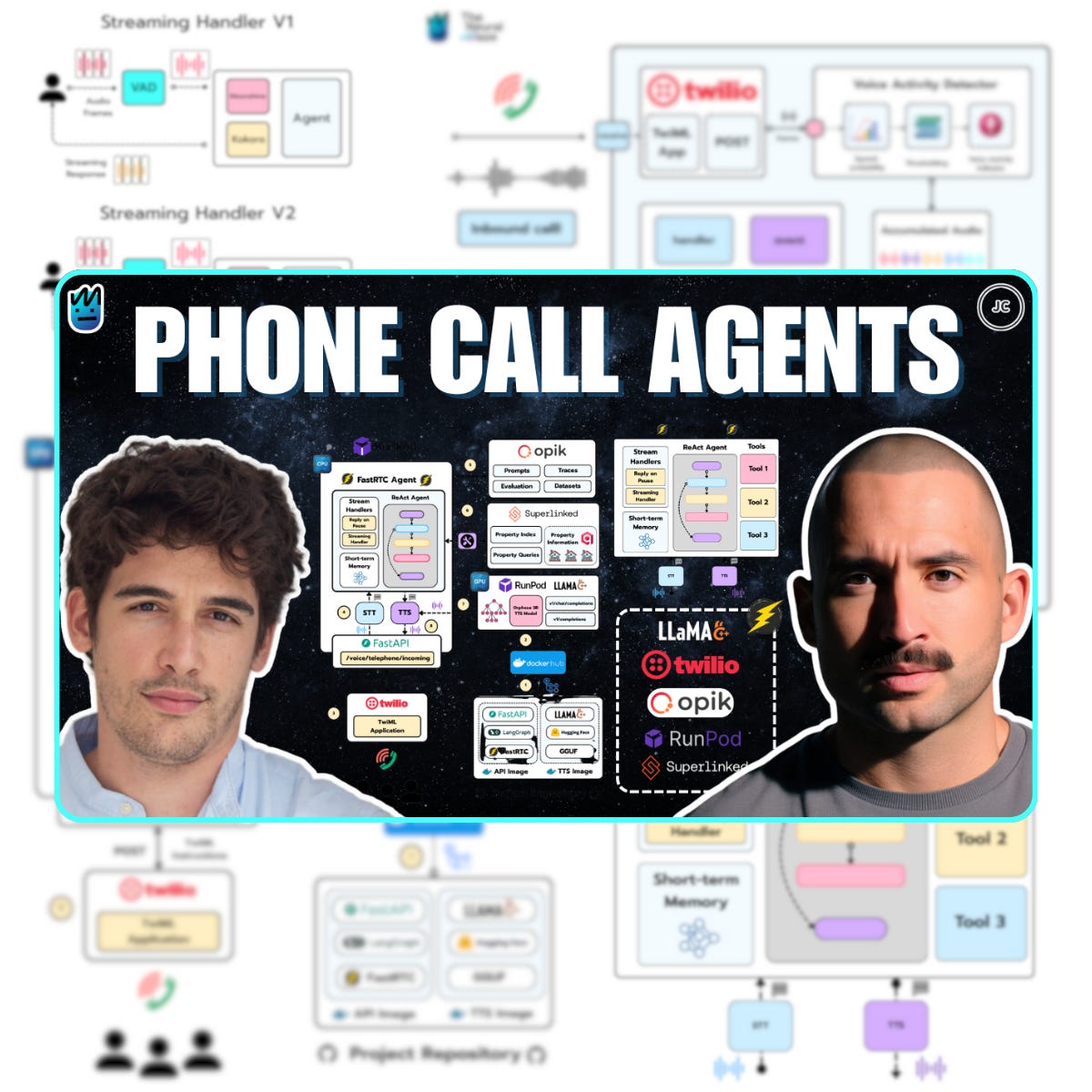
Hey everyone! 👋
Here’s a quick update for everyone following the Phone Calling Agents Course — whether you’re tuning in through the free posts or joining as a premium subscriber and building along each week.
Over the past few days, premium members have been digging into the core concepts behind real-time voice agents. With our live session for Lesson 1 happening tomorrow, I wanted to give you all a clear overview of where things stand, what we’ve covered so far, and what’s coming up next.
Here’s the short recap 👇
Lesson 0
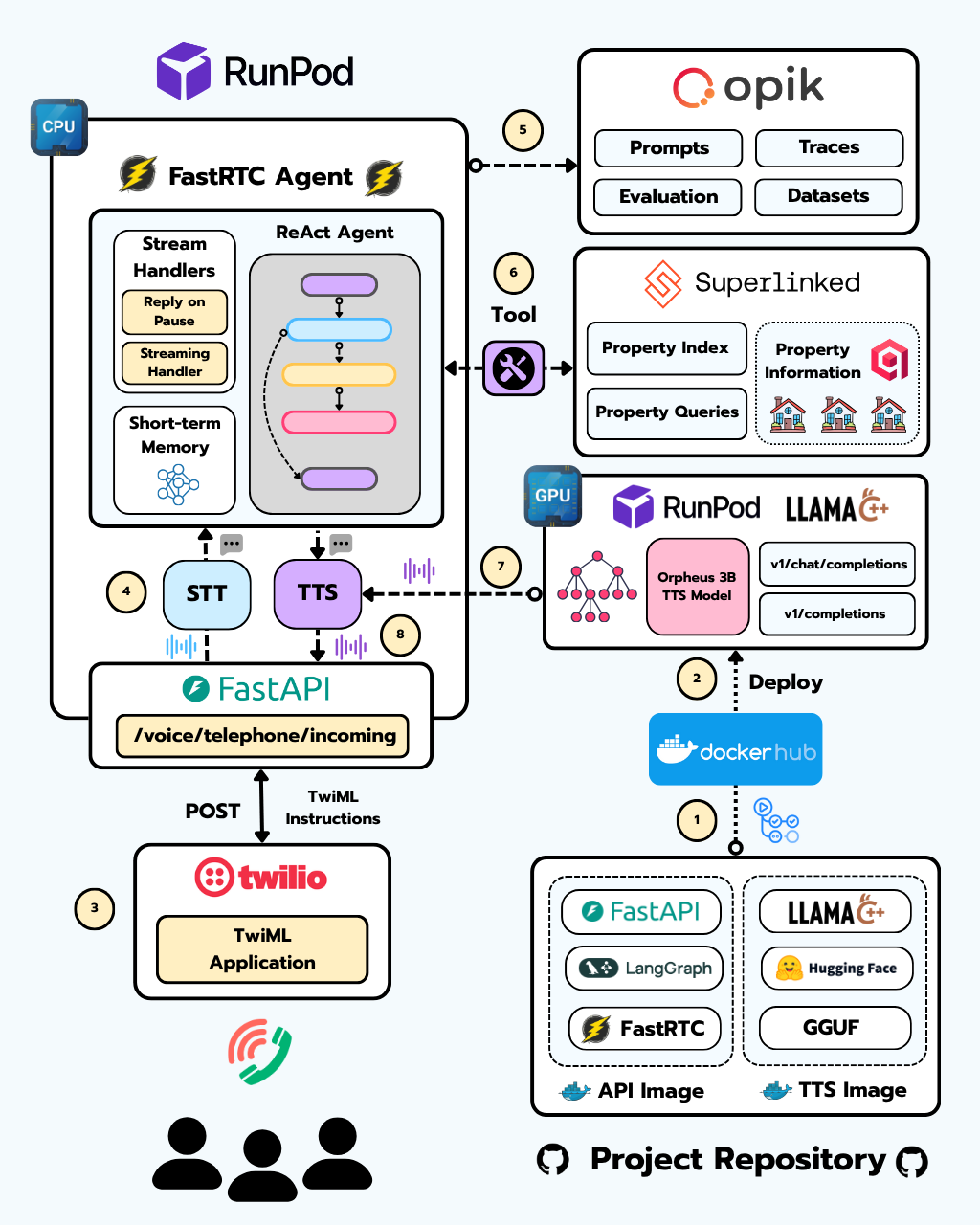
Lesson 0 is all about the big picture.
We break down the overall architecture of the project, walk you through how the course is structured, and give you a preview of what’s coming in the next lessons.
We also introduce the core tech stack we’ll be using, including tools such as:
FastRTC for WebRTC and WebSocket communication
Superlinked + Qdrant for storing property data and running searches across multiple data types
Moonshine and Whisper for speech-to-text
Kokoro and Orpheus 3B for text-to-speech
Runpod as our GPU cloud for deploying the application
Llama.cpp for efficiently serving GGUF models
Twilio for handling both incoming and outgoing phone calls
You can read the full article here:

And then, deepen your learning with the recorded live session:

Lesson 1
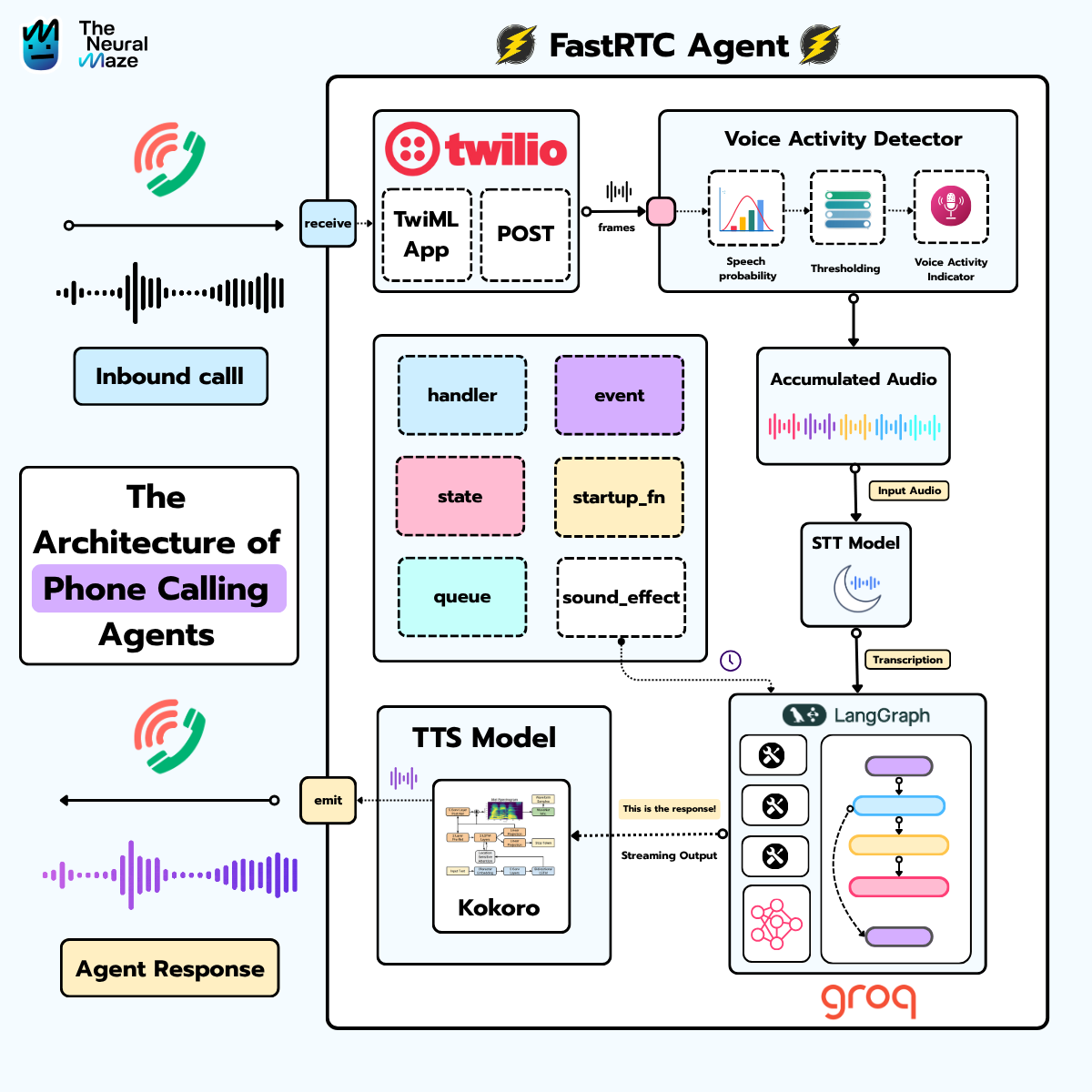
Lesson 1 is where the real building begins.
No more introductions, this is the lesson where you get hands-on. You’ll dive deep into FastRTC and the fundamentals of real-time communication (WebRTC and WebSockets), and you’ll also learn how to integrate FastRTC with LangGraph, the most mature agentic framework available today.
The lesson is split into two parts:
Part 1 - The FastRTC Playground
You’ll work through a detailed notebook designed to teach you everything you need to know about FastRTC from the ground up.
Part 2 - Connecting your FastRTC Agent
You’ll learn how to link your agent with:
Gradio UI, giving you a sci-fi–inspired interface on your computer that establishes a WebRTC connection so you can talk with your agent (very “Her” vibes).
Twilio, where you’ll plug your Voice Agent into Twilio to make your first phone call. (Heads up: everything is running locally at this stage!)
You can read the full written article here:

As for the live session … we are going live tomorrow!
Want to join us live tomorrow?
If you’re serious about learning how to build real-time voice agents—not demos, but production-ready systems—the premium track has everything you need.
👉 Upgrade now and join us for tomorrow’s live session.
See you there!
— Miguel