


Antonio Zarauz Moreno is the kind of engineer you want in the room when things are about to get hard.
If you’ve watched the Finetuning Sessions, you already know him. We've been collaborating on The Neural Maze for a while now, and every conversation with Antonio reminds me of the same thing: he's allergic to half-answers. If something works, he wants to know why. If it doesn't, he wants to know exactly where it broke.
So when Antonio told me he'd been accepted to speak at IEEE-CAI 2026 in Granada, I knew two things: first, the audience was in for a treat; second, I wanted him to tell that story here, in his own words.
That's why I asked him to write this one.
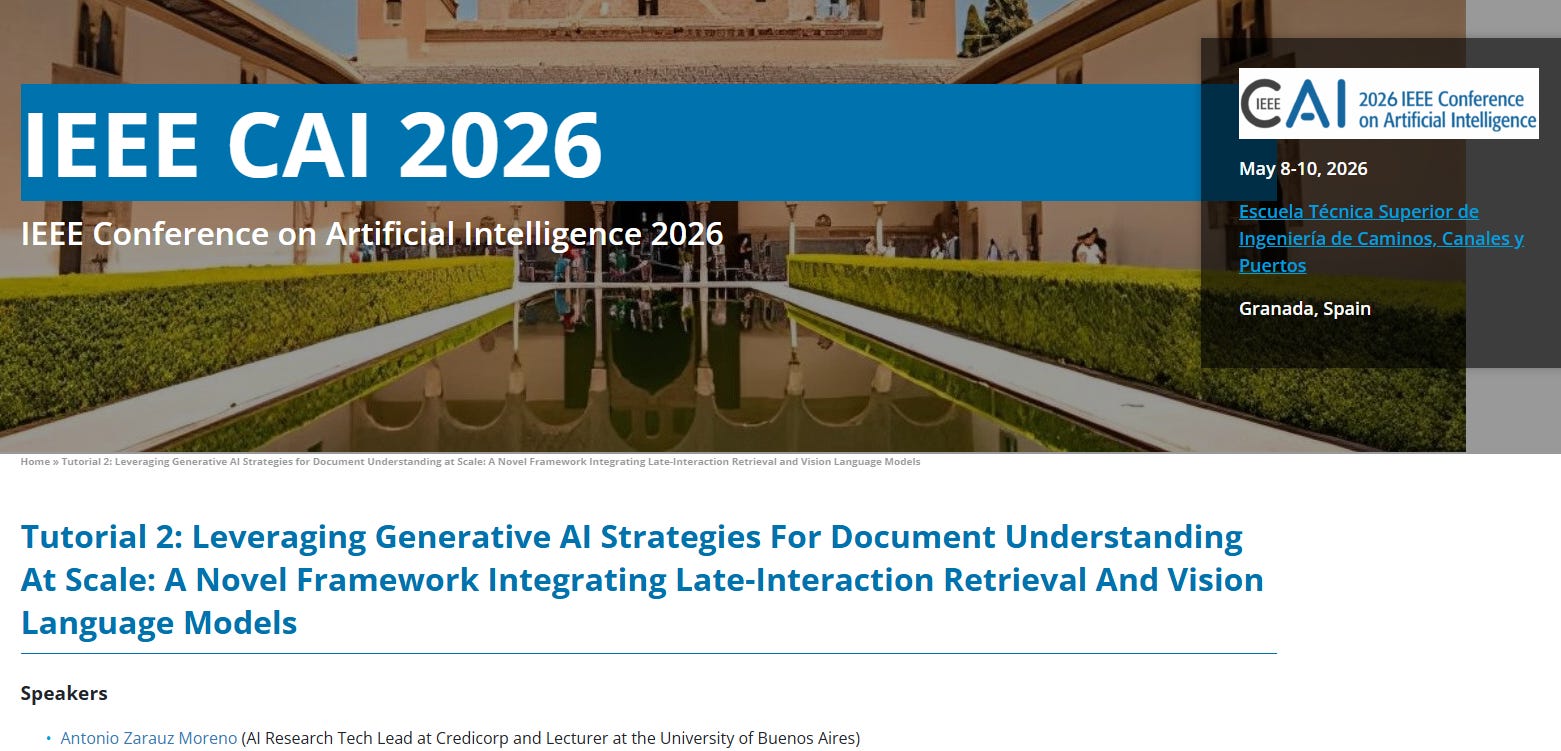
A few months back, Antonio took on a problem most engineers would call "solved" — extracting structured data from messy, real-world PDFs. He spent months in the trenches, ended up building a custom Kubernetes pipeline that processed 14,000+ documents on a $100 budget, and then took the whole story to the stage at IEEE-CAI 2026 in Granada.
What follows is his account: the November planning, the architecture decisions, the optimizations he was still pushing the day before the talk, and the four-hour conversation with an audience that turned out to be as nerdy as he is 🤣
Fair warning … this isn't a "vibecodable" recipe. It's the long way around, and that's exactly the point.
Take it away, Antonio! 👇
From November Planning to Production Success
They say that in mathematics and engineering, the simplest questions often demand the most grueling answers.
When I first started mapping out my 2026 conference calendar back in November 2025, IEEE-CAI 2026 immediately caught my eye as the perfect stage for a challenge I had been living and breathing for months: the deceptive reality of Document Intelligence.
On paper, the problem is almost elegantly simple: given a mountain of unstructured documents, how do you extract specific, high-value data points with maximum accuracy and minimum overhead?
Many in our field—myself included at one point—tend to view this as a "solved" problem or a commodity task. But as any practitioner knows, the gap between a "solved" theory and a "robust" production reality is an abyss.
I spent months in that abyss, navigating the "reality" of real-world documents that refuse to follow templates or logic. We weren't looking for a basic solution; we were looking for a masterclass in efficiency.
The result was a breakthrough we are incredibly proud of: a custom batch pipeline, orchestrated entirely within Kubernetes. We pushed the system to its limits, processing over 14,000 PDFs—averaging 27 pages each—and surgically extracting more than 30 complex fields from every single one.
💡 The kicker? We did it all on a $100 budget.
To put that in perspective, relying on third-party providers wouldn't have just been an order of magnitude more expensive—it would have been technically impossible due to the sheer volume and aggressive rate limits.
Achieving that level of scale and precision while maintaining such a lean footprint was the ultimate "eureka" moment. Once the numbers came in and the pipeline proved its resilience, I knew this wasn't just a win for our team—it was a story that belonged at IEEE-CAI.
I'm thrilled to be here to finally pull back the curtain on how we made it happen!
The current scope of the work
It is really hard to keep up to date a solution that relies on cutting-edge technology. In fact, our original work rely on jina-v4-embeddings and, yesterday, a newer (omni) version was released that pushed the benchmarks even further, shrinking model size 75%:
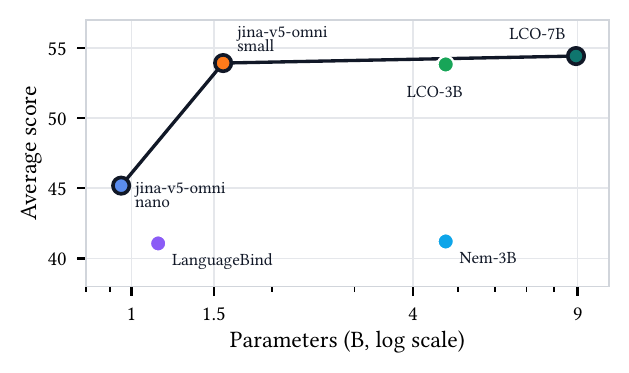
That is the main reason why some components of the original architecture were optimized between workshop submission and conference's day.
To be more precise, the architecture looks like this:
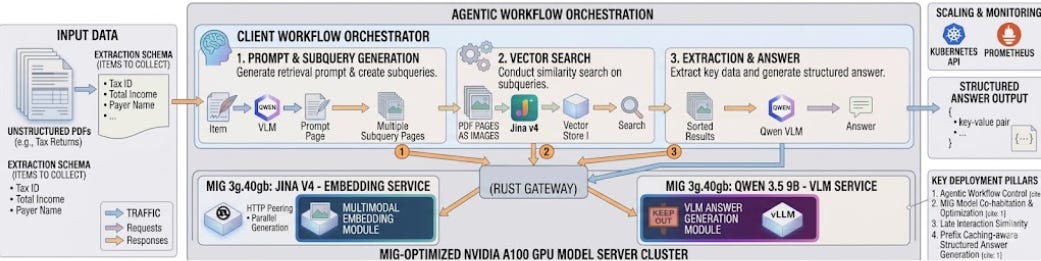
Some of the optimizations we pushed during these months were:
Smart autoscaling: Combining KEDA and a log analytics service from the Cloud provider of your choice is the best way to run multiple, complex criteria for spinning up the service and match both real time or batch workloads.
MIG: It is the right move when you have big GPUs and small models to host, guaranteeing SLAs and environment isolation.
Keep agentic / workflow isolated: By leveraging a client-server architecture, you simply put your orchestrator in a lightweight worker and you’re good to go.
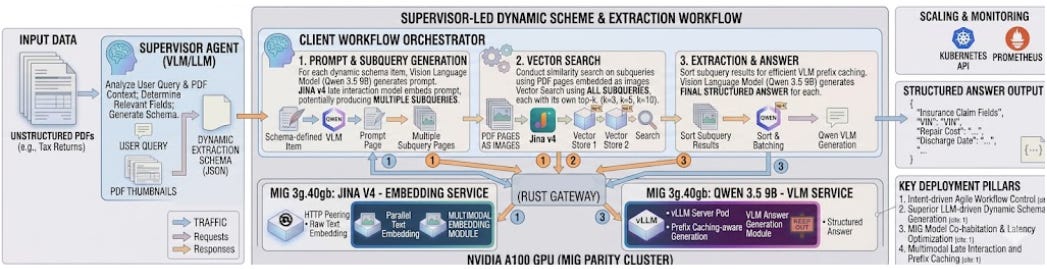
As a result, you get for each PDF a set of variables that are previously defined. But, what if the requested fields need to dynamically acquired? That lead us to intent-aware agentic patterns:
This is certainly not the kind of project that you can vibecode, but trust me, learning the hard way pays off.
This is certainly not the kind of project that you can vibecode, but trust me, learning the hard way pays off.
The event
I wasn't sure what to expect from a four-hour marathon on document intelligence, but filling the room was just the beginning. The real highlight was the audience; their technical expertise turned a long presentation into a brilliant conversation that I enjoyed from the very first question.
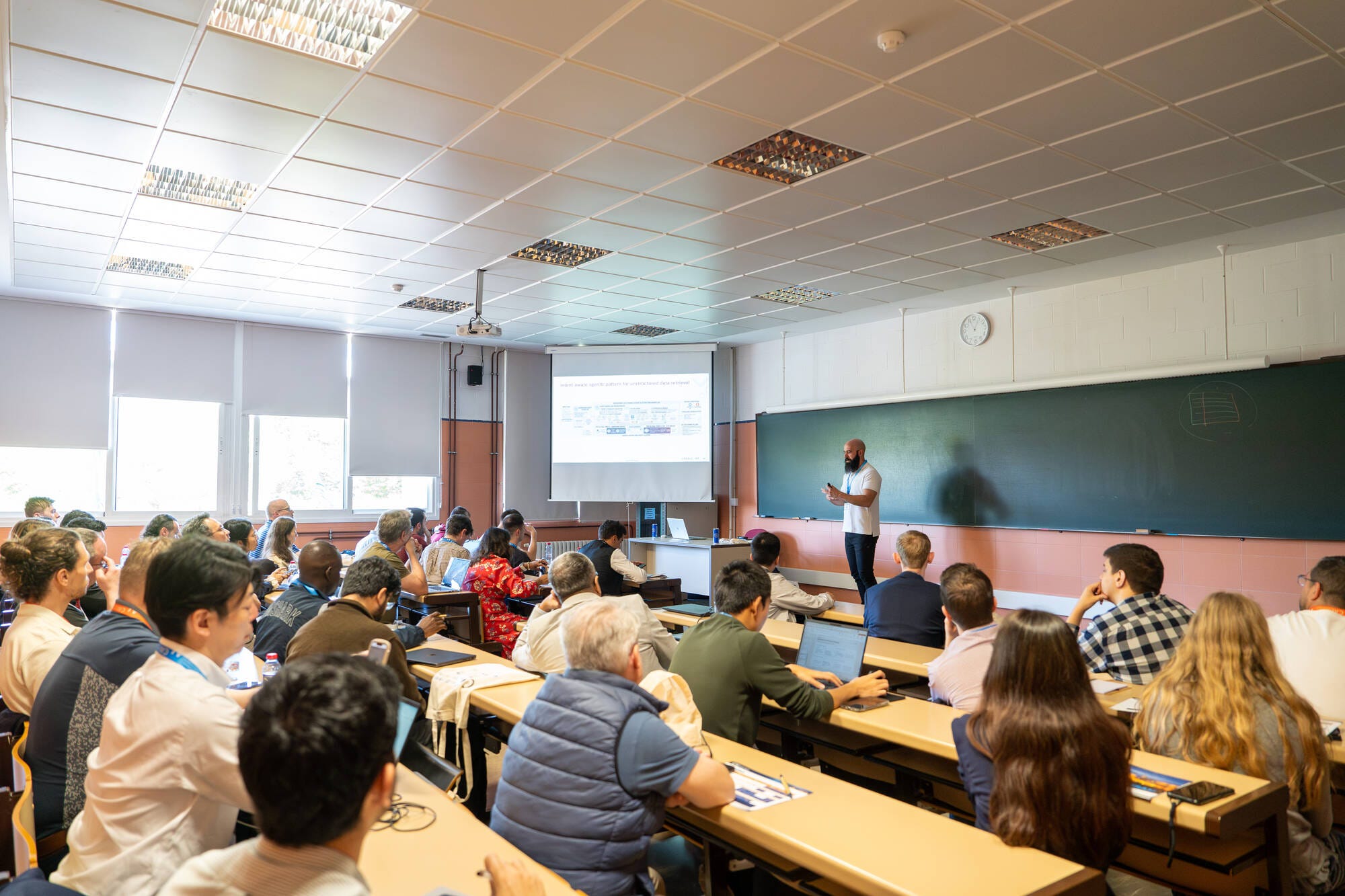
Driven by enthusiasm, we ended up tackling everything from the surgical decomposition of multimodal models for vLLM to the nuances of MIG deployment for Qwen-based embedding and reranker models.
Being able to nerd out on sharing prefix caches to save prefill time—while balancing those 'in-the-trenches' production best practices—was a rare treat. It's not often you find a group that can navigate that level of technical complexity and make the entire experience so genuinely delightful.
The energy at IEEE-CAI 2026 has been nothing short of electric, transforming the conference floor into a vibrant hub of cross-disciplinary brilliance.
Between the high-stakes keynote sessions, the hallways are packed with researchers and industry leaders engaging in the kind of spontaneous, high-energy brainstorming that only happens when the "vibes" are just right.
There is a palpable sense of shared mission; everyone from PhD candidates to veteran engineers seems eager to peel back the curtain on their latest breakthroughs, creating an atmosphere that is as welcoming as it is intellectually rigorous.
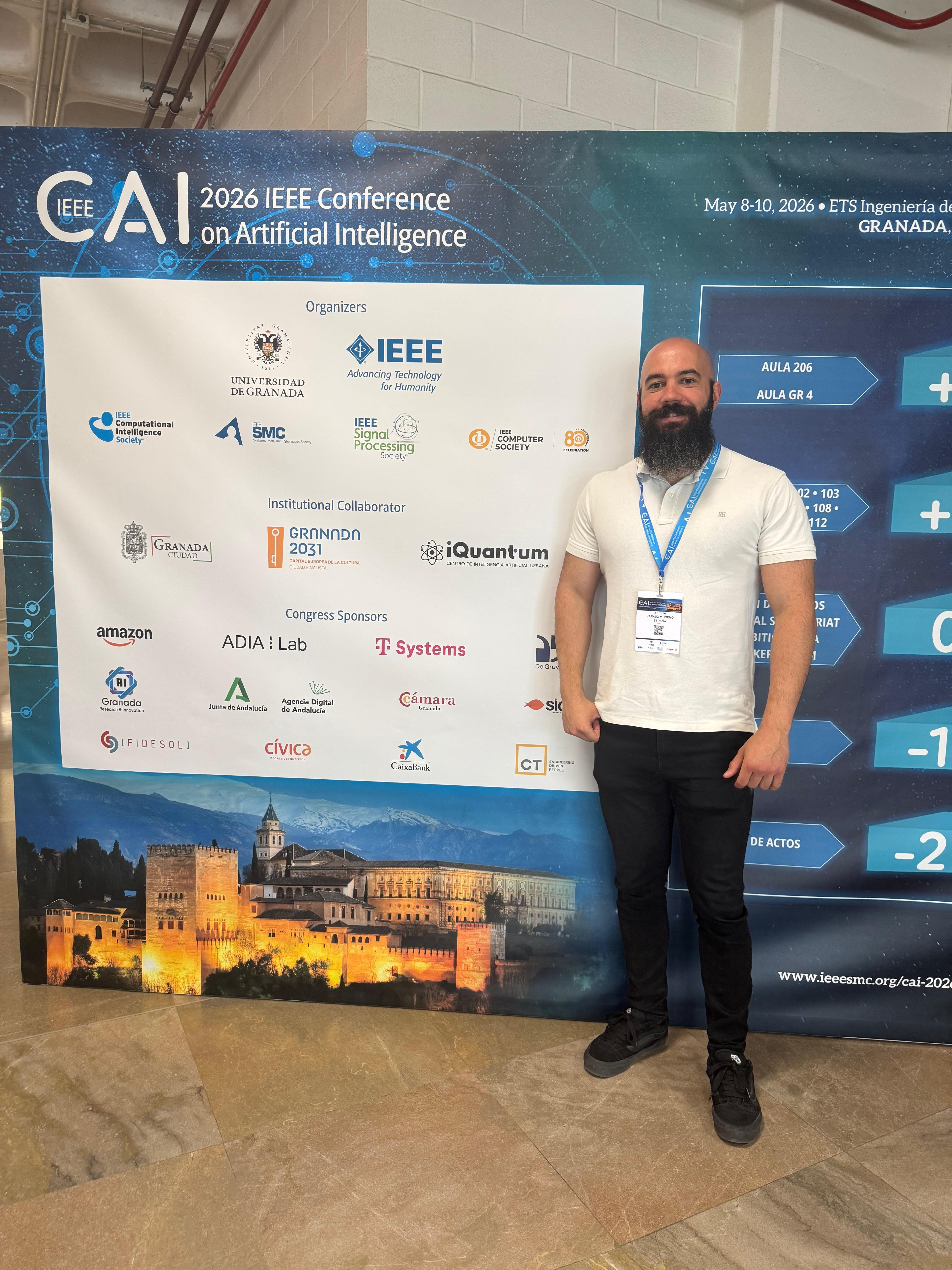
Networking here has evolved far beyond the standard exchange of digital business cards, feeling more like a collaborative festival of ideas.
The dedicated lounge areas and evening mixers are overflowing with attendees huddled over laptops or sketching architectures on napkins, fueled by the collective excitement of the AI community's most recent leaps.
It's rare to find an event that balances such heavy-hitting technical discourse with a genuine spirit of camaraderie, making every coffee break feel like a potential jumping-off point for the next big industry partnership.
What truly sets this year's event apart is the seamless flow of innovation between different technical domains. You might walk into a conversation about ethical AI frameworks and leave with a new perspective on hardware acceleration, all thanks to the diverse crowd IEEE-CAI attracts. The sheer volume of "aha!" moments echoing through the venue is a testament to the event’s success in fostering a space where ideas aren't just presented, but are stress-tested and improved in real-time.
It's an environment that doesn't just showcase the future of artificial intelligence—it actively builds it through pure, unadulterated collaboration.
Closing thoughts
The current landscape of AI is more active—and frankly, more thrilling—than ever before. We have moved past the era of mere "chatbots" and entered the age of the Inference Economy, where the focus has shifted from training massive models to orchestrating them into reliable, autonomous systems.
Being at IEEE-CAI 2026 in Granada has been a powerful reminder that while the math remains the foundation, the real magic happens in the implementation.
If you've followed my journey from that November planning phase to building high-efficiency document pipelines, you know that I'm obsessed with one thing: making AI work in the real world.
Theory is great, but production is where the truth lives. That is exactly why we've launched our new course: Grokking Agents in Production.
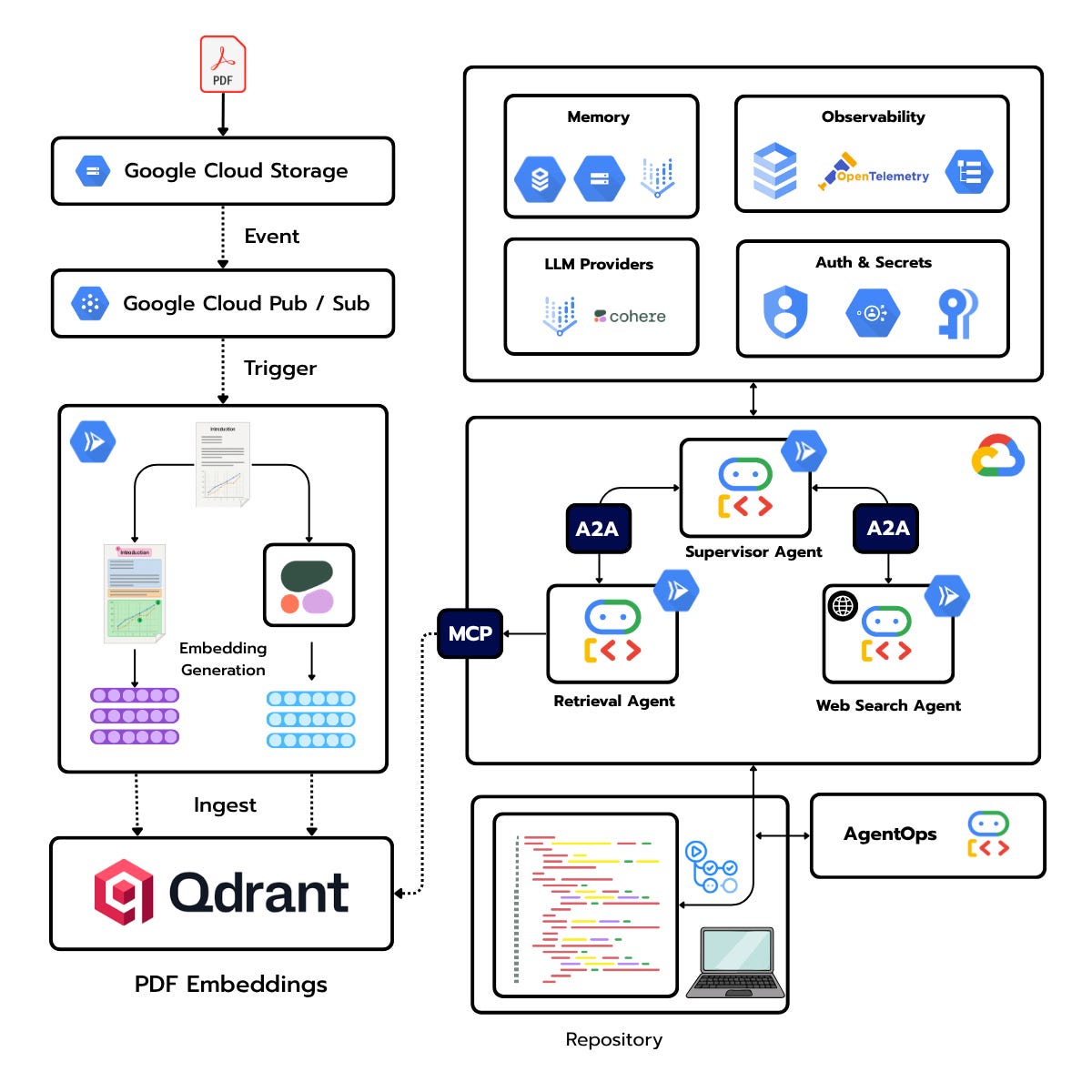
We aren't just teaching you how to prompt; we are showing you how to build, orchestrate, and deploy robust multi-agent systems that actually deliver.
We cover the high-level engineering that turns a fragile prototype into a resilient system:
Multi-Agent Orchestration: Moving from a single overloaded agent to specialized, coordinated teams.
Industry Protocols: Implementing MCP (Model Context Protocol) and A2A (Agent-to-Agent) standards.
Production-Grade Deployment: Shipping to Google Cloud with proper IAM, Secret Management, and OpenTelemetry.
Beyond "Vibes-Based" Testing: Building evaluation-gated CI/CD pipelines to measure RAG and trajectory quality.
If you're ready to stop experimenting and start shipping, I'd love to see you there.
Are you going to include IEEE-CAI 2026 document intelligence workshop materials in this course? Or there will be separate course
I can't do it is not now time for docker.
1. I work here
2. Docker now on everyone malware can come
3. Needto build sth like" gen" opportunity malware