


Today I’ve got a gift for you, dear builders 😎
Yesterday, I went full MrBeast mode again (recording non-stop) to bring you another long-form YouTube video where I show you how to build AI systems that actually work.
This time, I’m teaming up with the one and only Alex Razvant 🤝
Together, we split the tasks to give you a full end-to-end experience of building what’s probably the most complex AI system I’ve ever built in public …
Meet Kubrick - A multimodal MCP Agent System for Video Processing.
Think of it as Video RAG on steroids: intelligent, scalable, and designed to handle complex video workflows.
If you’ve been waiting for a deep dive into advanced AI + video systems, this is the one 👇
Part 1 - Understanding the full project
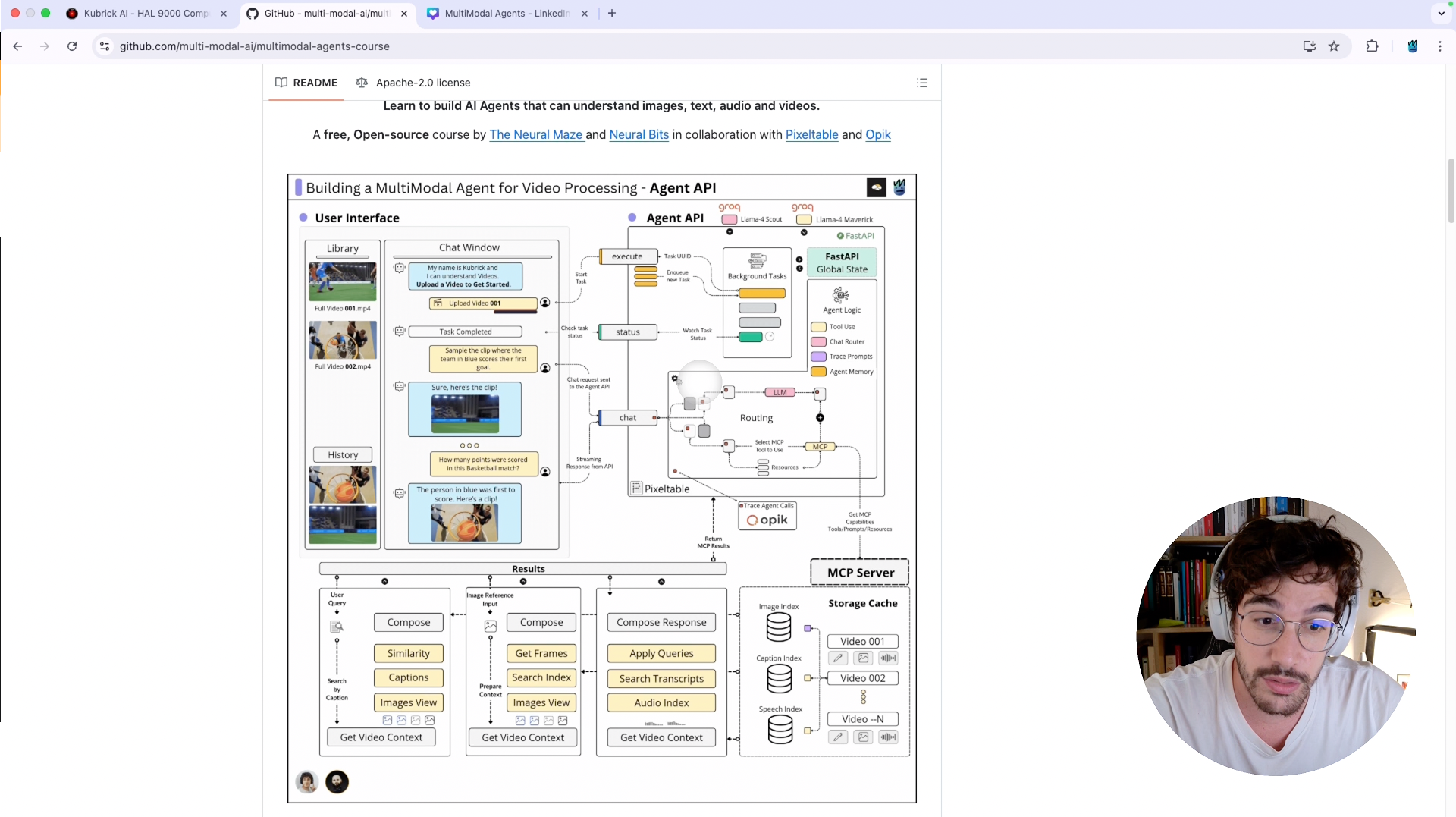
We’ll start with a high level overview of Kubrick, highlighting its three core components:
MCP Server
Agent API (with Observability Layer)
React UI
Part 2 - Multimodal Pipelines with Pixeltable
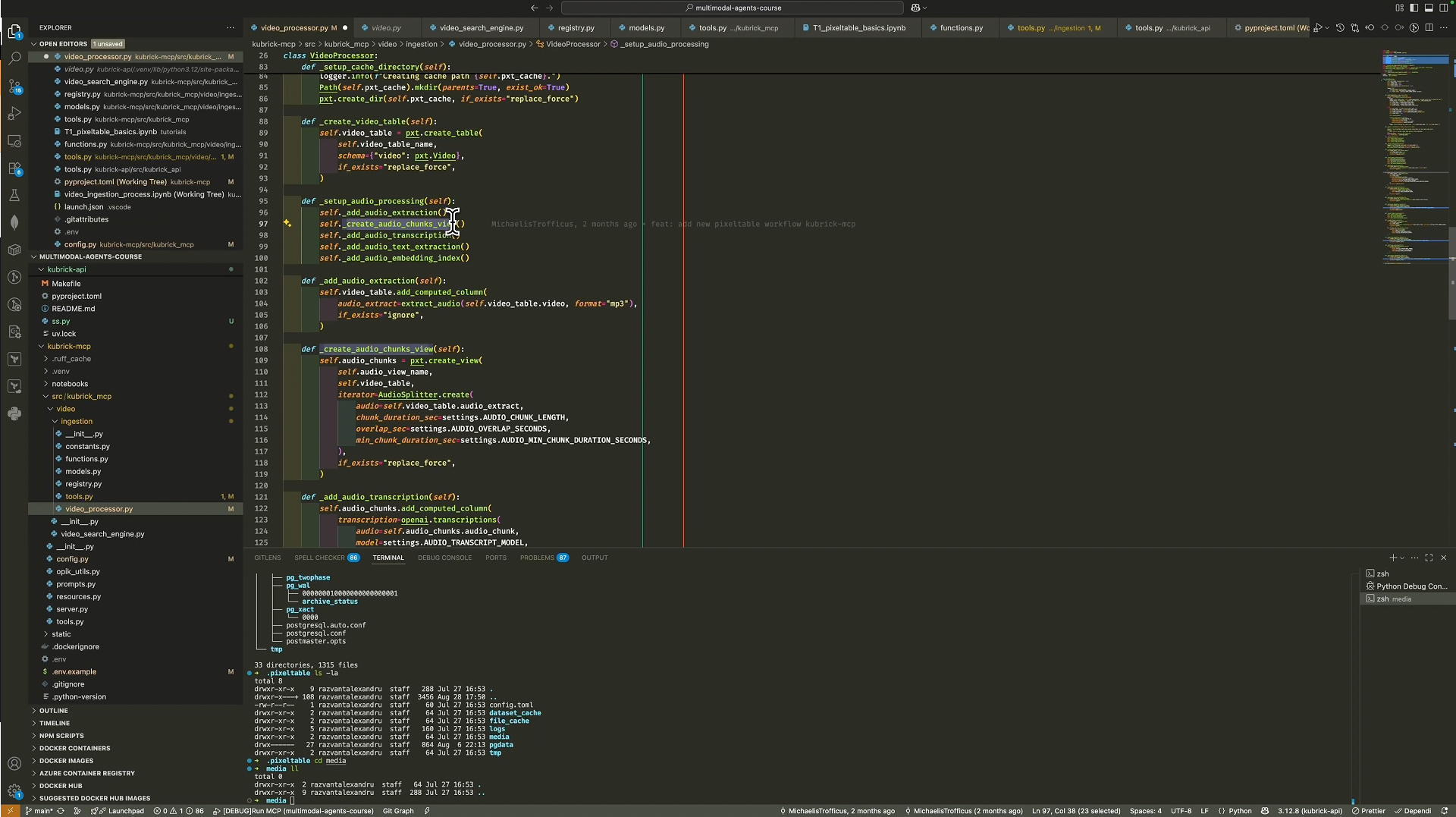
Alex will continue with an in-depth look at building Multimodal Pipelines using Pixeltable.
They are essential for filling the three embedding indexes, which hold embeddings for video transcriptions, captions, and frames.
Part 3 - MCP Servers with FastMCP and Opik
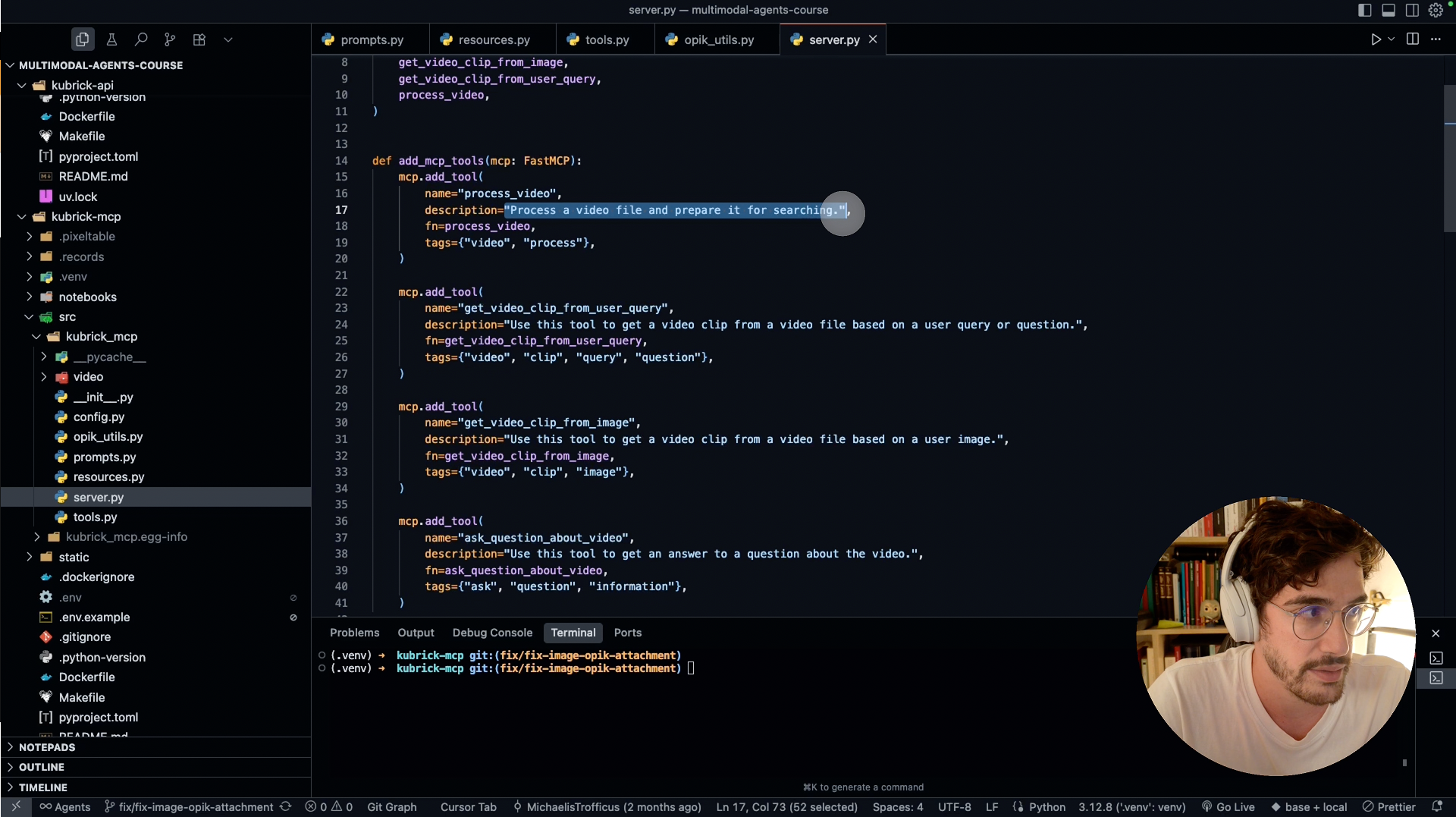
Alex will then hand the mic back to me for a crash course on FastMCP and how to expose three types of entities with it:
Resources
Prompts (versioned using Opik)
Tools (the video processing tools that the Agent will use)
Part 4 - MCP Agents, API and Observability
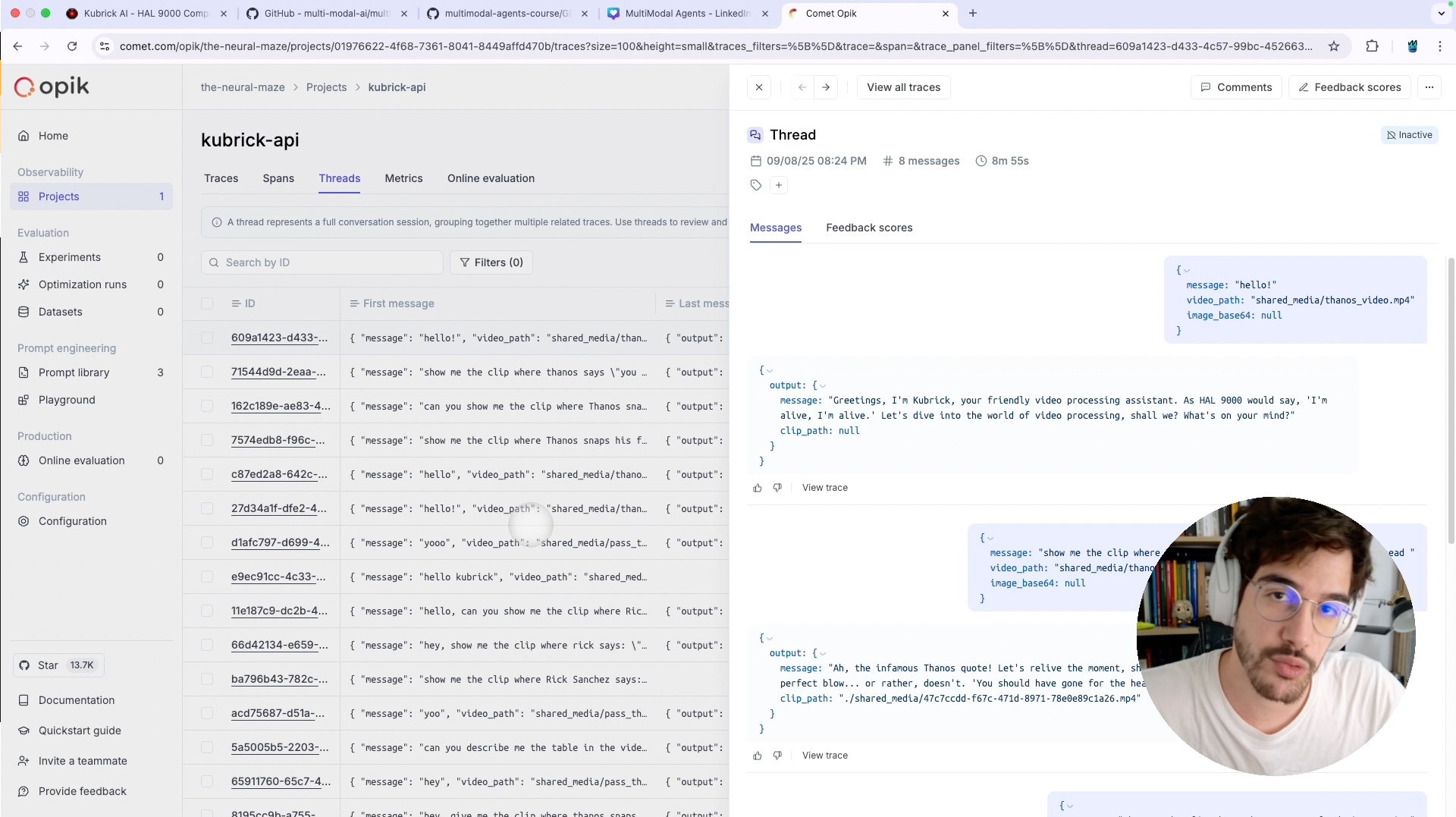
I’ll continue with a step-by-step explanation of how to build an MCP Agent from scratch using Groq LLMs.
We’ll also explore how to trace the Agent with Opik by decorating the various methods it calls.
Part 5 - Understanding React for AI People
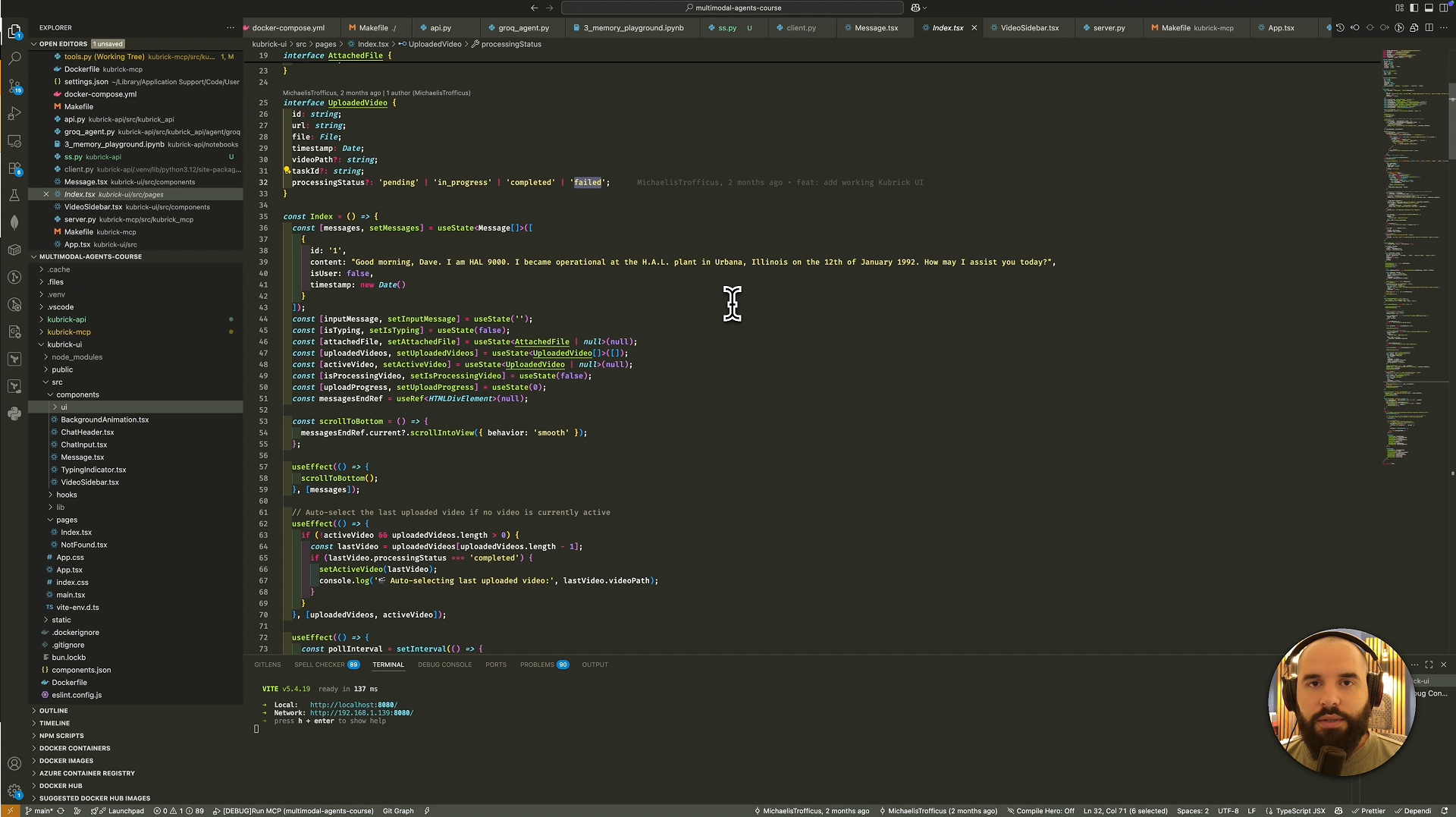
Finally, Alex will wrap things up with an introduction to React tailored for AI practitioners.
Since we used React to build the Kubrick UI, we thought it would be valuable to give you a quick overview as well!
Let me know what you think about this open-source course!
What topics would you like me to cover next?
I’ll be keeping an eye on your suggestions! 👀
Ciao builders 🫶
I'm going through the video and it is definitely a wonderful implementation. Thank you so much for this.
I'll want to ask however, why shouldn't frameworks like streamlit be considered when building applications like this? If at all it can also be considered when building something of such, what are the necessary things to consider or look out for?
I really anticipate you response.
This is wonderful. I just love the implementation and will definitely try it out.